
What is insulation blanket?
- 29 Jul, 2024
- Industry
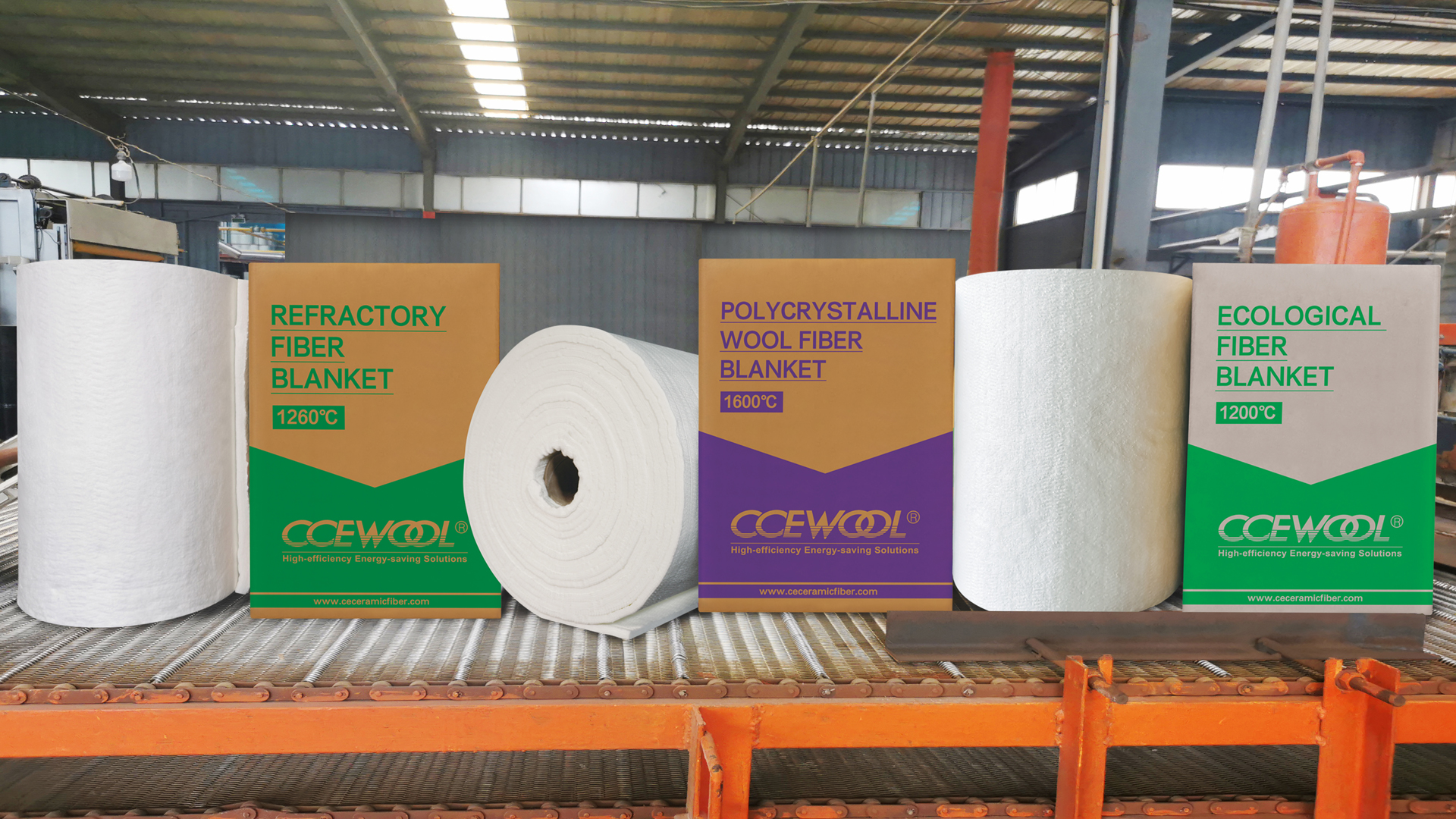
An insulation blanket is a specialized thermal insulation material used in high-temperature environments, widely applied in industrial and construction fields. They work by blocking heat transfer, helping to maintain the thermal efficiency of equipment and facilities, saving energy, and improving safety. Among various insulation materials, refractory ceramic fiber blankets, low bio-persistent fiber blankets, and polycrystalline fiber blankets are highly regarded for their excellent performance and wide applications. Below is a detailed introduction to these three main types of insulation blankets.
Refractory Ceramic Fiber Blankets
Features and Advantages
Refractory ceramic fiber blankets are made from high-purity alumina and silica through a resistance furnace melting method or an electric arc furnace blowing method. These fiber blankets have the following notable features:
Excellent High-Temperature Performance: Can be used for extended periods in high-temperature environments ranging from 1000℃ to 1430℃.
Lightweight and High Strength: Lightweight, easy to install, with high tensile strength and compressive resistance.
Low Thermal Conductivity: Effectively reduces heat transfer, saving energy.
Good Chemical Stability: Resistant to acids, alkalis, and most chemicals.
High Thermal Shock Resistance: Maintains stability in environments with rapid temperature changes.
Low Bio-Persistent Fiber Blankets
Features and Advantages
Low bio-persistent fiber blankets are made from new environmentally friendly materials through a melt-blowing process. Compared to traditional ceramic fiber blankets, these fiber blankets offer the following advantages:
Environmentally Friendly and Safe: High biological solubility in the human body, posing no health hazards.
Good High-Temperature Performance: Suitable for high-temperature environments ranging from 1000℃ to 1200℃.
Low Thermal Conductivity: Ensures good insulation effect, reducing energy consumption.
Excellent Mechanical Properties: Good flexibility and tensile strength.
Polycrystalline Fiber Blankets
Features and Advantages
Polycrystalline fiber blankets are made from high-purity alumina fibers through a special process. Their main features include:
Extremely High Temperature Resistance: Suitable for environments up to 1600℃.
Excellent Insulation Performance: Extremely low thermal conductivity, effectively blocking heat transfer.
Stable Chemical Properties: Remains stable at high temperatures, not reacting with most chemicals.
High Tensile Strength: Can withstand significant mechanical stress.
As high-temperature insulation materials, insulation blankets play a crucial role in industrial and construction fields. Refractory ceramic fiber blankets, low bio-persistent fiber blankets, and polycrystalline fiber blankets each have unique features and can meet the needs of different application environments. Choosing the right insulation blanket not only improves the thermal efficiency of equipment but also effectively saves energy and ensures operational safety. As a global leader in insulation materials, CCEWOOL® is dedicated to providing customers with high-quality insulation solutions. Contact us to learn more about our products.


