
Ceramic Fire Board – CCEWOOL®
- 24 Nov, 2025
- Insight
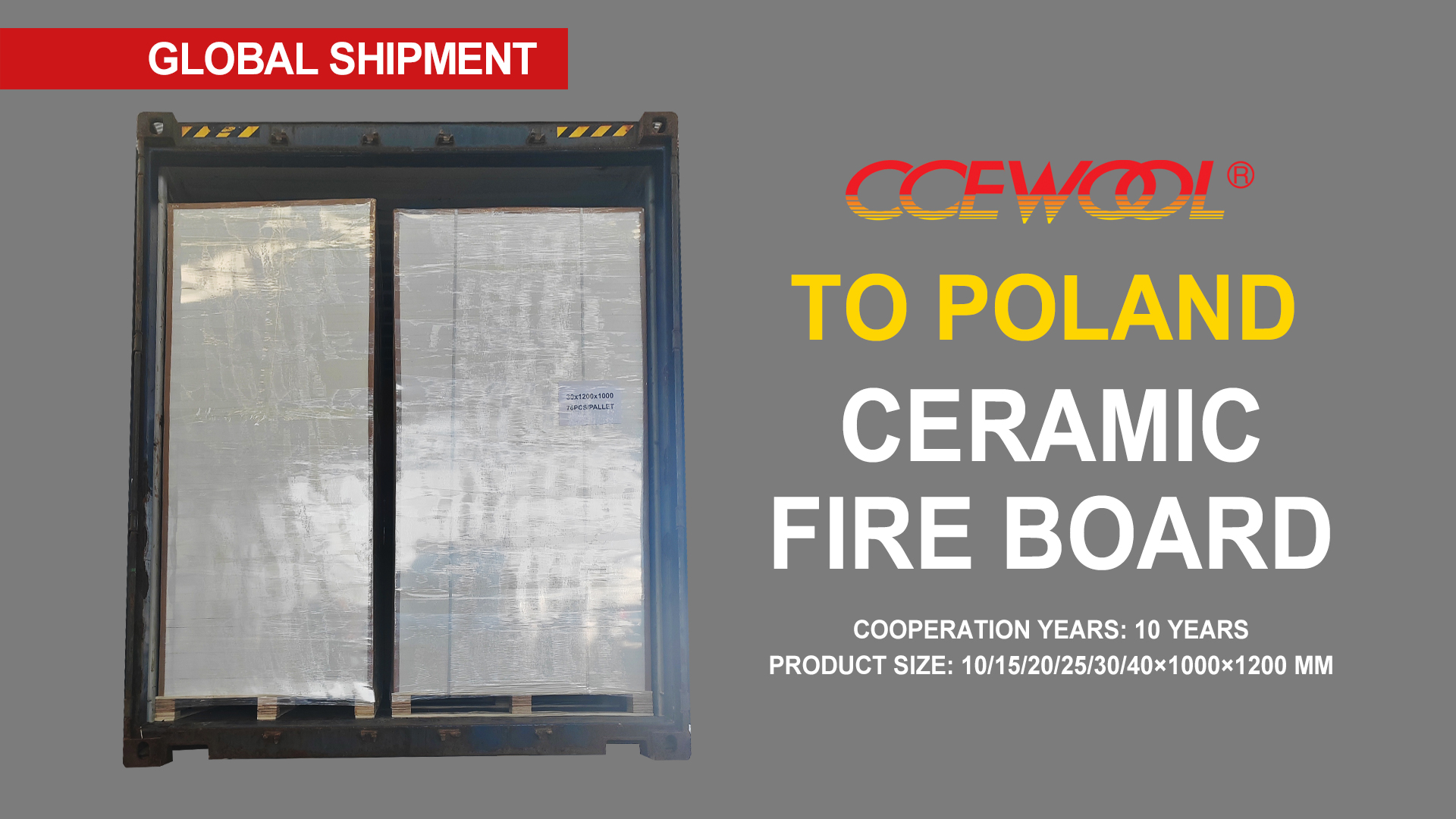
In high-temperature industrial environments, the thermal-shock stability of a Ceramic Fire Board directly determines the service life and safety of the furnace lining. Thermal shock refers to the rapid temperature gradients that materials experience during quenching or repeated heating–cooling cycles. According to thermal-mechanical behavior and viscoelastic research, the uniformity of the fiber structure, the elastic recovery of the bonding system, and the level of residual stress are the core factors that govern a material’s thermal-shock resistance. CCEWOOL® enhances all three by optimizing every stage of fiber forming, sheet molding, drying, and curing—allowing its Ceramic Fire Board to maintain structural integrity through hundreds, even thousands, of temperature cycles without powdering, cracking, or delamination.
24-Hour Continuous Forming:
Uniform Fiber Architecture as the Foundation of Thermal-Shock Resistance
To achieve strong thermal-shock resistance, a Ceramic Fire Board must first possess a thoroughly uniform fiber distribution. Traditional batch-type production—due to intermittent starts, stops, and unstable temperatures—often results in inconsistent fiber fineness and uneven deposition, creating stress concentration points.
CCEWOOL® uses a 24-hour continuously operated forming line, maintaining constant slurry concentration, vacuum suction strength, and fiber deposition rate throughout production. This uninterrupted process ensures a homogeneous three-dimensional microstructure with consistent density and fiber orientation. Thermal-shock models show that the more uniform the internal structure, the more effectively thermal stress can dissipate during rapid cooling, significantly improving structural integrity.
Thus, continuous forming is the first critical guarantee of CCEWOOL® Ceramic Fire Board’s thermal-shock stability.
2-Hour Rapid Drying:
Reducing Residual Stress for Longer Thermal Cycle Life
Residual stress is one of the most common causes of thermal-shock failure in ceramic fiber products. Uneven drying creates moisture gradients and localized volume-shrinkage differences within the board. These hidden stresses are released violently during quenching, causing cracks or powdering.
To prevent this, CCEWOOL® implements a rapid uniform-dehydration system that shortens traditional 6–10 hour drying to just about 2 hours. Accelerated and highly synchronized moisture migration minimizes stress accumulation at fiber bonding points, allowing the board to contract uniformly across its entire thickness. This “stress-elimination drying” significantly enhances structural retention during 900°C–water quench cycles, meeting demanding industrial thermal-shock requirements.
Automated Constant-Pressure Pressing:
Strengthening Fiber Bonds to Prevent Brittle Failure
Thermal-shock resistance depends not only on the fibers themselves but also on the strength and elasticity of the interconnected fiber network. CCEWOOL®’s automated constant-pressure pressing equipment applies uniform pressure across the full surface and thickness of the board, producing a dense, evenly bonded fiber matrix.
Research indicates that a denser and more uniformly bonded network dissipates thermal-gradient stress more effectively, slows crack initiation and propagation, and enhances elastic recovery.
As a result, CCEWOOL® Ceramic Fire Board maintains structural continuity under long-term thermal cycling, preventing brittle fracture and extending service life.
Precision Temperature-Controlled Curing:
Creating “Structural Memory” for Thermal-Shock Recovery
Curing determines whether the board can retain structural stability after repeated thermal shock. CCEWOOL® uses segmented constant-temperature curing, ensuring the bonding system reacts uniformly without under-curing or over-curing.
This controlled curing process produces a stable inorganic bonding network that forms a long-lasting structural lock between fibers. It also gives the board a “structural memory” effect—allowing the microstructure to partially restore its original arrangement after thermal cycling. This prevents powdering, edge cracking, and warping, even under severe industrial thermal conditions.
The combination of structural memory and uniform bonding is a key reason for CCEWOOL® Ceramic Fire Board’s superior thermal-shock durability.
Intelligent Manufacturing Ensures Batch-to-Batch Consistency
CCEWOOL®'s self-developed “Ceramic Fiber Products Intelligent Manufacturing Management System V1.0” monitors equipment status, process parameters, and production rhythm in real time. Its primary advantage is:
Minimizing fiber-density fluctuations and structural deviations caused by equipment instability, ensuring consistent thermal-shock performance across all production batches.
This level of consistency is crucial for steelmaking, heat-treatment, aluminum furnaces, and other industries requiring continuous operation.
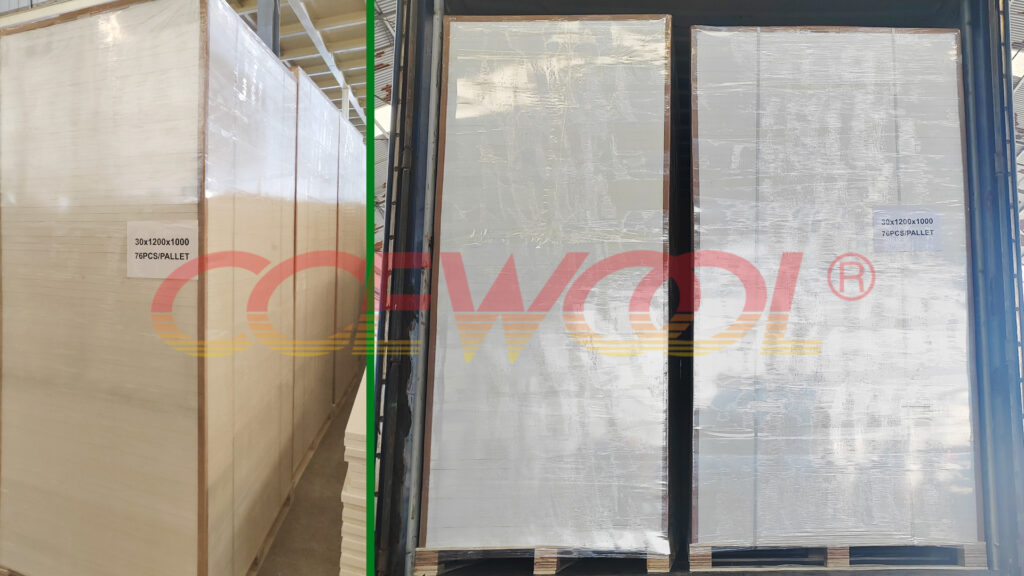
Polish Customer
Cooperation years: 10 years
Ordered product: CCEWOOL Ceramic Fire Board
Size: 10/15/20/25/30/40 × 1000 × 1200 mm
A major Polish equipment manufacturer has used CCEWOOL® Ceramic Fire Board for over 10 years in steel and heat-treatment furnace linings. The customer reports excellent toughness and edge stability under intense thermal-shock conditions, with no powdering, spalling, or deformation. Board flatness and mechanical stability surpass local European suppliers.
They also expressed high satisfaction with CCEWOOL®'s delivery speed, technical support, and long-term reliability—considering CCEWOOL® one of their most stable and trustworthy material partners.


