
Ceramic Fire Blanket Insulation | Annular Furnace Lining Optimization | CCEWOOL®
- 18 Mar, 2026
- Industry
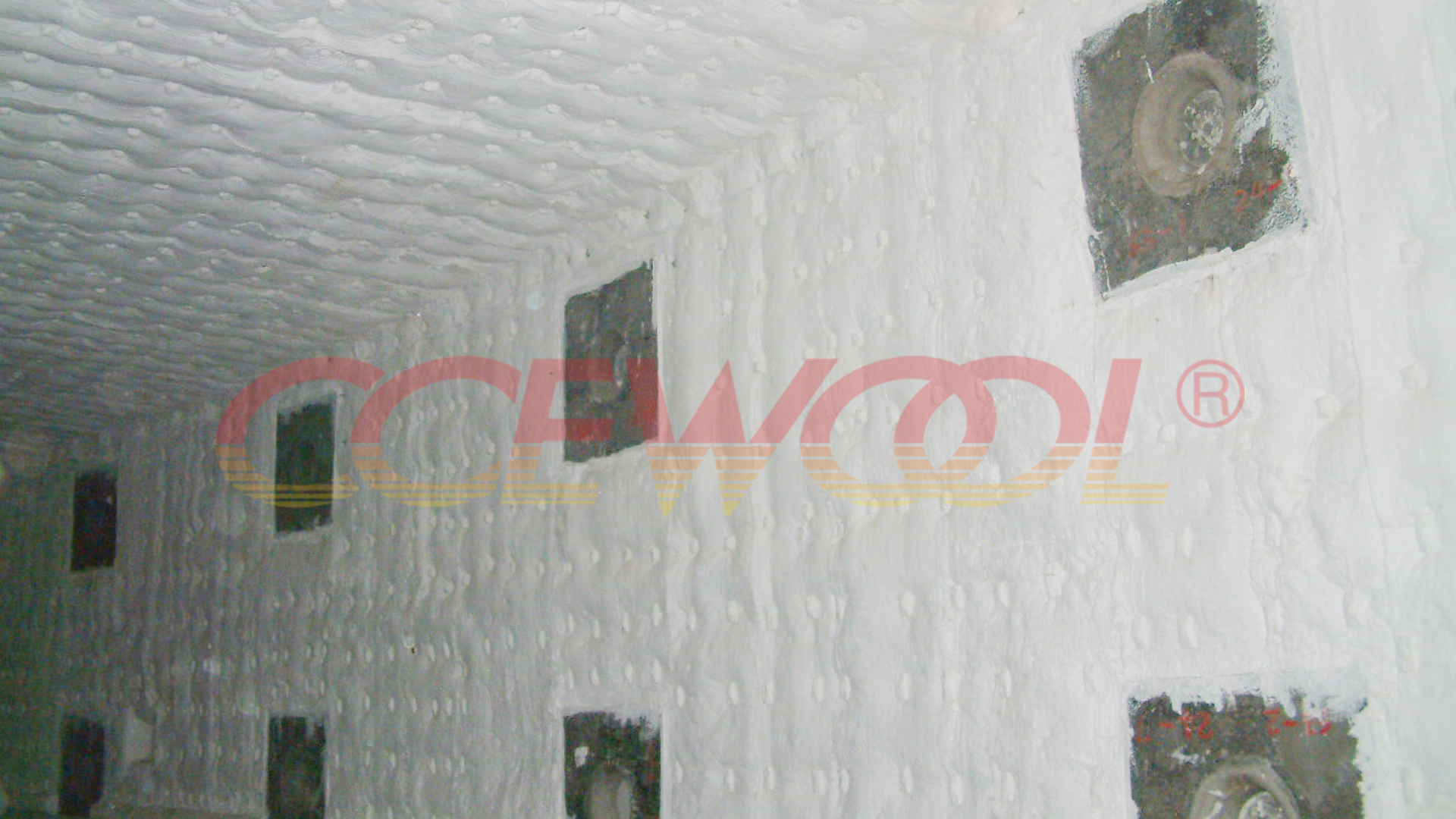
An Annular Furnace is a typical continuous high-temperature heating system. Its hearth rotates while workpieces move continuously along the circular furnace chamber, completing the stages of preheating, heating, and soaking. The charging and discharging ends are connected, forming a closed thermal processing path. This furnace type is widely used in forging heating, pre-quench heating, continuous heat treatment, and certain powder metallurgy processes.
Depending on steel grade and process requirements, the operating temperature typically ranges between 1050–1300°C and is maintained under weakly reducing or slightly positive pressure atmospheres.
Compared with conventional straight-through furnaces, annular furnaces exhibit unique structural characteristics. The furnace chamber consists of inner and outer circular walls and a ring-shaped roof. During high-temperature operation, the inner wall expands outward while the outer wall expands inward. This opposing thermal expansion generates complex bidirectional stress distribution within the lining system, increasing the risk of stress concentration and cracking over long-term operation.
For this reason, furnace lining materials must provide not only stable thermal resistance and insulation performance, but also sufficient flexibility and expansion compensation capability.
Under these structural conditions, full-fiber or composite fiber lining systems based on CCEWOOL® ceramic fire blanket insulation have become a key solution for modern annular furnace optimization.
Roof Lining Design: Balancing Weight Reduction and Structural Continuity
The furnace roof is continuously exposed to high-temperature radiation and functions as a suspended structure, making weight control and anchoring reliability critical factors. A layered modular composite lining system is widely recognized as a reliable design approach.
The backup layer utilizes CCEWOOL® 1260HPS ceramic fiber blanket as the foundational ceramic fire blanket insulation layer. Its role extends beyond reducing cold-face temperature and limiting heat transfer to the steel shell. Thanks to its low impurity content and controlled linear shrinkage at elevated temperatures, it maintains structural integrity over extended service periods, minimizing the risk of gap formation caused by uneven thermal contraction.
The hot face layer consists of CCEWOOL® 1430HZ ceramic fiber modules installed under pre-compression and arranged in a staggered “soldier-course” configuration. U-shaped compensation blankets are inserted between modules to absorb linear shrinkage and structural displacement during thermal cycling.
This composite structure—combining ceramic fire blanket layers with modular insulation—significantly reduces roof weight while enhancing the system’s ability to accommodate thermal expansion differences. As a result, long-term structural continuity and sealing stability are maintained.
Wall Lining Design: Managing Differential Expansion in Circular Geometry
The wall structure is directly affected by the geometric stress characteristics of the annular configuration. Because the inner and outer walls expand in opposite directions, rigid brick linings often struggle to absorb deformation, leading to cracking and spalling.
To address this, multi-layer ceramic fire blanket insulation combined with ceramic fiber modules is commonly employed. The backup layer consists of multiple layers of CCEWOOL® 1260°C ceramic fiber blanket to establish a stable thermal gradient. The hot face uses CCEWOOL® 1260HPS or 1430HZ ceramic fiber modules, installed in arc-aligned or wedge-shaped configurations to reduce geometric stress concentration.
Compared with traditional brick linings, the compressibility of fiber modules effectively accommodates differential expansion between the inner and outer rings. Meanwhile, the continuous ceramic fire blanket layer helps preserve overall hot-face integrity even under minor structural displacement, thereby reducing cracking risk and extending maintenance intervals.
Burner Zone, Flue Opening, and Access Door Areas: Stabilizing High-Stress Regions
Burner blocks, flue openings, and access door areas are subjected to localized high thermal loads, flame radiation, gas velocity, and mechanical stress. These regions demand both structural strength and reliable insulation performance.
In these zones, CCEWOOL® ceramic fiber castable combined with Y-shaped heat-resistant steel anchors is typically applied. The fiber castable provides low thermal conductivity while offering sufficient compressive strength to support localized structural requirements. Its monolithic casting reduces joint lines and integrates smoothly with surrounding ceramic fire blanket insulation, minimizing thermal bridges and improving sealing performance.
High- and Low-Temperature Zone Partition Walls: Controlling Thermal Migration
Annular furnaces are typically divided into preheating, heating, and soaking zones. Temperature differences between zones can be significant. If partition walls lack sufficient thermal resistance, heat migration may occur, affecting temperature control accuracy and increasing fuel consumption.
Large-format CCEWOOL® ceramic fiber modules combined with high-density ceramic fire blanket layers and fiber castable are used to construct lightweight partition walls. This composite structure reduces heat transfer while maintaining necessary structural strength. Improved thermal separation enhances independent temperature control capability, which is particularly important for automated control systems and stable heating curves.
In annular furnaces characterized by bidirectional thermal expansion, lining flexibility and expansion compensation capability are more critical than nominal temperature ratings alone.
A composite lining system based on CCEWOOL® ceramic fire blanket insulation, combined with ceramic fiber modules and fiber castable, can significantly reduce lining weight, lower cold-face temperature, and mitigate thermal stress concentration while meeting high-temperature operating requirements.
Under the structural condition of opposing inner and outer ring expansion, the continuous application of ceramic fire blanket layers working together with modular systems enables long-term operational stability.
For annular furnaces requiring continuous operation and precise automatic temperature control, material zoning and system-based lining design have become the mainstream technical approach for modern furnace optimization.


