
A New Choice of Refractory and Insulation Products for Energy-Efficient Operation of Walking Beam Reheating Furnaces
- 07 Jan, 2026
- Industry
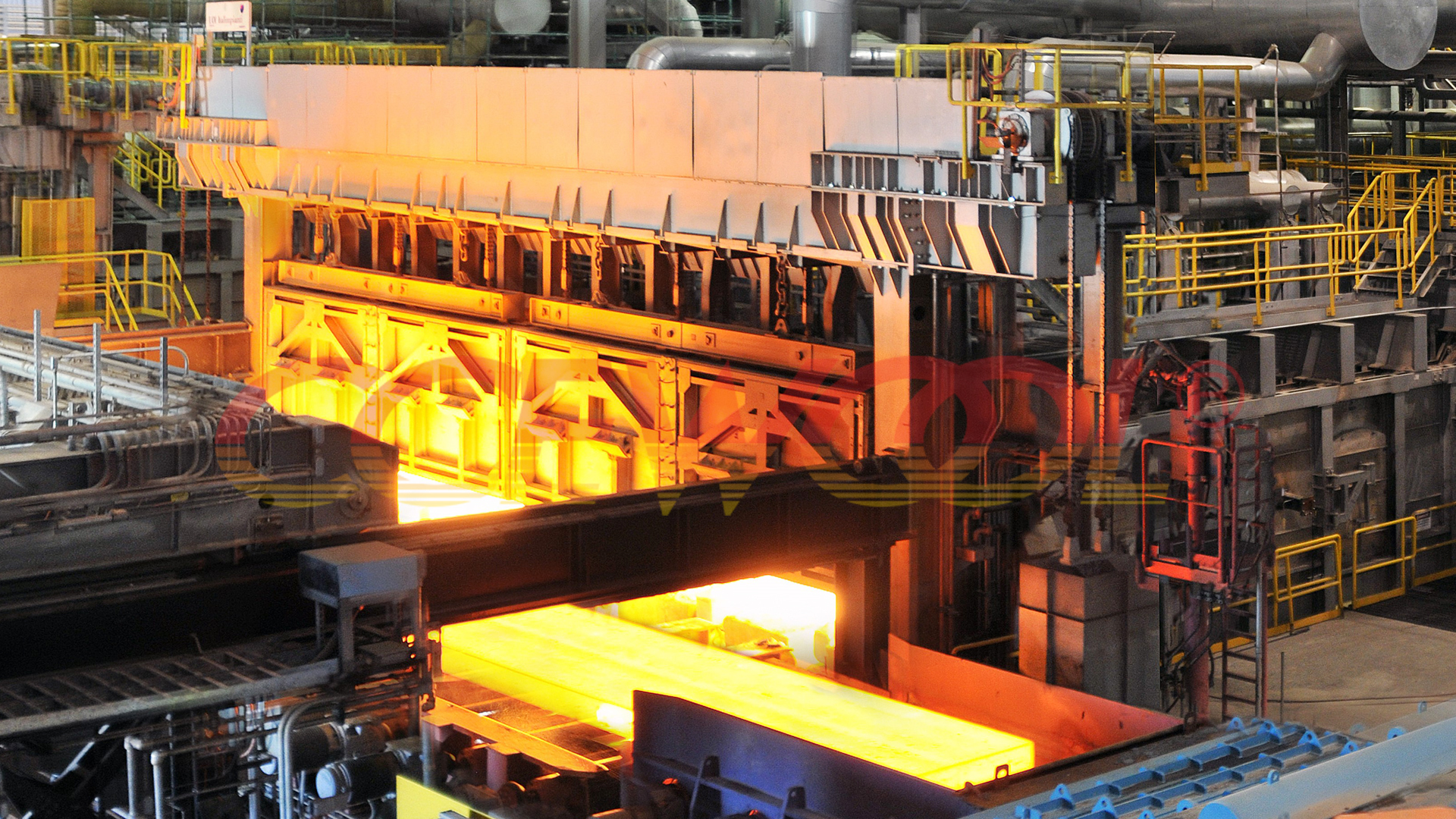
Walking beam reheating furnaces are widely used for billet heating and are one of the preferred furnace types for high-speed wire rod, bar, tube, and billet production lines. This type of furnace typically consists of a preheating zone, heating zone, and soaking zone, with furnace temperatures generally ranging from 1100 to 1350°C. Common fuels include gas as well as light and heavy oil.
Due to their large furnace span and continuous long-term operation, heat losses from the furnace walls, roof, and openings have a direct impact on overall energy consumption. As a result, furnace lining design must be configured by zones, with a clear focus on high-temperature stability, resistance to erosion, and minimized heat loss.
Under typical operating conditions—when the furnace temperature in the heating zone is below 1350°C and the flue gas velocity is less than 30 m/s—the areas above the burners on the furnace walls and the furnace roof are suitable for all-fiber lining systems to achieve optimal energy-saving performance. The significance of this boundary lies in the fact that when temperature and gas velocity remain within controllable limits, the advantages of fiber linings—such as low heat storage and low thermal conductivity—can be more effectively converted into stable, long-term energy savings.
Areas Below the Burners: Furnace Bottom and Lower Sidewalls
(Priority on resistance to iron scale erosion)
In walking beam reheating furnaces, the furnace bottom and lower sidewalls below the burners are continuously exposed to iron scale erosion. In these areas, the primary concern is not achieving the lowest possible thermal conductivity, but rather ensuring erosion resistance and structural reliability.
A more practical and commonly adopted configuration is therefore based on erosion-resistant refractory materials combined with insulation layers to reduce heat loss, typically including:
CCEWOOL® Ceramic Fiber Insulation Boards (used as thermal insulation backing layers)
CCEFIRE® Lightweight Insulating Fire Bricks (providing insulation with limited structural support)
CCEFIRE® Castable Refractory Linings (serving as the hot-face or working layer to withstand erosion and mechanical impact)
The design logic is to allow castables to handle hot-face erosion and mechanical stress, while insulation bricks and fiber insulation boards provide thermal resistance and temperature reduction—achieving a balance between service life and energy efficiency.
Areas Above the Burners and Furnace Roof
(Fiber-based structures for reduced heat storage and heat loss)
Above the burners on the sidewalls and at the furnace roof, operating conditions are more suitable for utilizing the advantages of fiber materials, particularly their low heat storage and low thermal conductivity. Based on practical engineering experience, the following lining structures are commonly applied:
Structure 1: Insulation Board + Fiber Castable + Polycrystalline Fiber
CCEWOOL® Ceramic Fiber Insulation Board as the base insulation layer
CCEFIRE® Castable as the hot-face or transition layer to enhance erosion resistance
CCEWOOL® Polycrystalline Fiber as the hot-face facing material to improve high-temperature stability
This structure combines the thermal efficiency of fiber linings with improved hot-face durability.
Structure 2: Laid Ceramic Fiber Blanket + High-Alumina Fiber Modules + Polycrystalline Fiber
Laid CCEWOOL® Ceramic Fiber Blanket as an insulation or buffer layer
CCEWOOL® LZ Ceramic Fiber Modules providing structural integrity and hot-face strength
CCEWOOL® Polycrystalline Fiber to enhance high-temperature stability and thermal shock resistance
This configuration emphasizes functional layering, suitable for areas with higher demands on hot-face reliability.
Structure 3: Fiber Strip Installation on Existing Brick or Castable Linings
(Energy-saving retrofit method)
Many walking beam furnaces still operate with refractory brick or castable linings. Over long-term operation, issues such as excessive shell temperature, high heat loss, and even furnace plate deformation may occur. Without significantly altering the original structure, bonding CCEWOOL® ceramic fiber blanket strips onto the existing lining is a direct and effective energy-saving retrofit solution. This approach increases thermal resistance while minimizing changes to the original working lining.
Flue Duct Areas: Layered Composite Lining
Flue duct sections typically adopt a layered composite lining structure, commonly using:
CCEWOOL® 1260HPS Ceramic Fiber Blanket
This configuration offers good installation flexibility, high insulation efficiency, and effective adaptation to varying temperature zones and structural constraints, significantly reducing heat loss from flue ducts.
Discharge Door Area: Composite Fire Curtain to Reduce Radiant Heat Loss
The discharge opening is a major source of heat loss:
Furnaces with frequent discharging often do not use mechanical doors, resulting in significant radiant heat loss.
Furnaces with mechanical doors may experience operational inconvenience due to lifting mechanism limitations.
A practical solution is the use of a fire curtain, typically constructed as:
Two layers of CCEWOOL® ceramic fiber fabric with a CCEWOOL® ceramic fiber blanket core
The hot-face material can be selected according to furnace temperature. This structure is lightweight, compact, easy to install, corrosion-resistant, and exhibits stable high-temperature properties. It effectively addresses the drawbacks of traditional furnace doors, such as excessive weight, high heat loss, and frequent maintenance.
As a continuously operating, energy-intensive industrial furnace type, the energy efficiency and operational stability of a walking beam reheating furnace depend largely on how well the lining and insulation system matches actual service conditions. Material selection should be based on a comprehensive evaluation of temperature levels, gas flow, mechanical stress, and long-term reliability—rather than focusing solely on maximum temperature ratings. By applying appropriate refractory and insulation material combinations in different functional zones, heat loss can be significantly reduced, shell temperature effectively controlled, and lining service life extended, providing reliable support for stable production and energy optimization in steel plants. This application-oriented lining design philosophy has become a fundamental basis for the energy-efficient operation of modern walking beam reheating furnaces.


