
Why do insulating fire brick have such different thermal conductivity?
- 10 Dec, 2025
- Industry
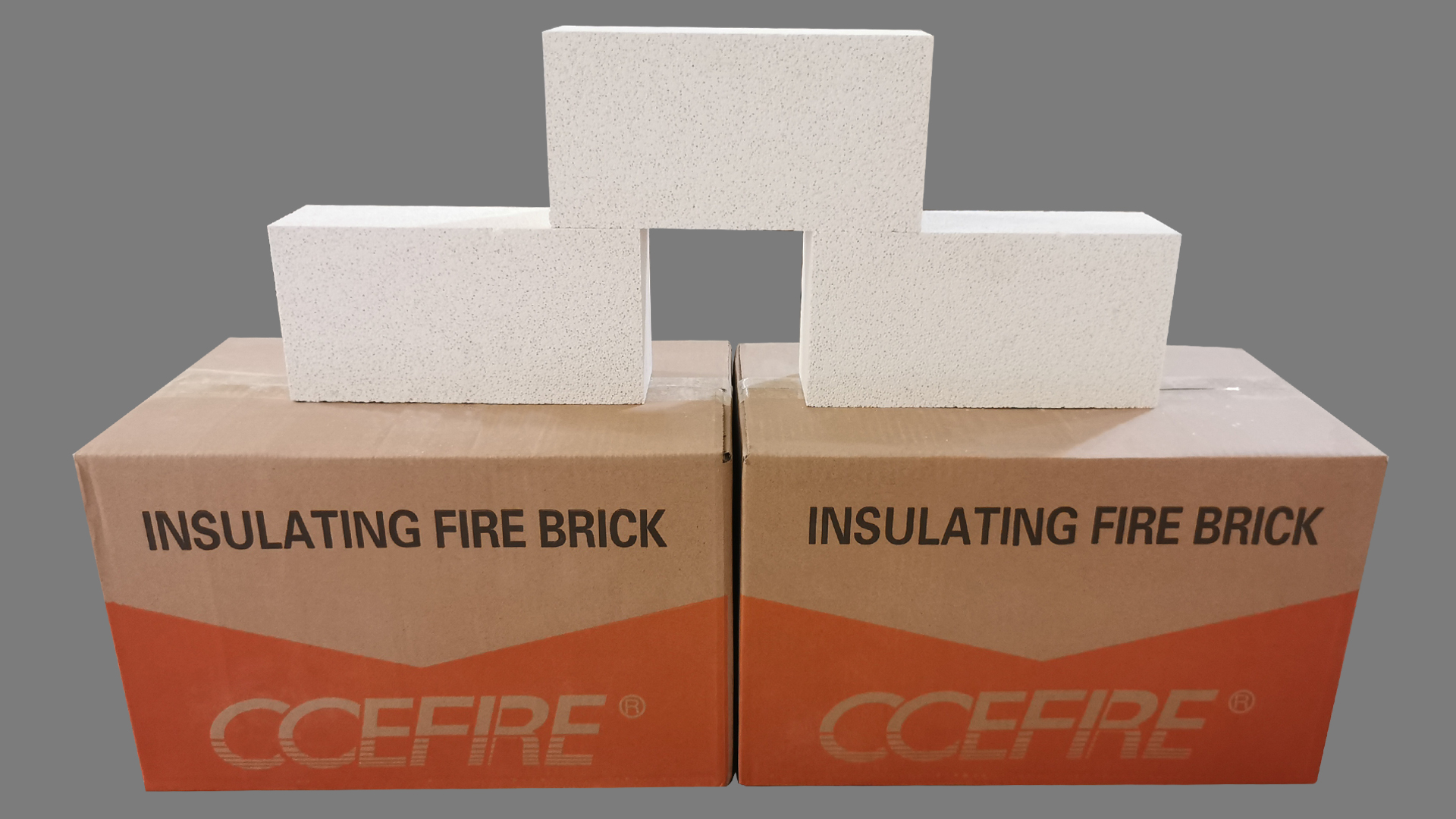
In high-temperature industrial equipment, the core indicator of insulation performance is not temperature rating but thermal conductivity.
The lower the thermal conductivity, the less heat is transferred through the lining, resulting in higher fuel efficiency and lower operating costs.
However, insulating fire bricks from different manufacturers often vary significantly: some bricks show acceptable figures at the beginning, but their thermal conductivity rises quickly during service, causing higher energy loss, increased surface temperature and even more severe lining wear.
The determining factor behind the thermal conductivity of an insulating fire brick is not only raw materials — it is whether the internal microporous structure is uniform, stable and controllable.
Why CCEFIRE® delivers ultra-low thermal conductivity?
Microporous structure that is engineered, not accidental
CCEFIRE® insulating fire bricks use high-purity raw materials to keep low-melting impurities to a minimum, preventing unexpected melts that would damage the pore structure.
More importantly, we do not rely on random pore formation — we make the pores form as designed.
This is achieved through the technical advantages of the CCEFIRE® 88-meter fully automated tunnel kiln:
Stable and precise thermal field control
Uniform temperature distribution with extremely low fluctuation prevents over-firing / under-firing and abnormal pore formation.
Long constant-temperature firing zone
Ensures the pore structure fully develops into a highly uniform closed-cell system rather than a network of interconnected pores.
Sintered thoroughly — but not excessively
Maintains mechanical strength while preserving lightweight porosity, enabling continuously low thermal conductivity.
Numerous studies show that: the higher the closed-cell rate and the more uniform the pore size, the lower and more stable the thermal conductivity over time.
This is the reason why CCEFIRE® insulating fire bricks do not merely perform well initially — they keep their low thermal conductivity throughout long-term operation.
Ultra-low thermal conductivity is not a metric, it is long-term economic value
Thanks to this controllable microporous structure, CCEFIRE® insulating fire bricks deliver outstanding real-world benefits:
Reduced heat loss through the furnace wall
Lower external surface temperature
More uniform furnace temperature
Longer lining life
For aluminum, steel, heat-treatment, glass, and battery-materials industries where thermal efficiency directly affects production cost, low thermal conductivity = lower energy cost + longer lining life + more stable plant operation.
CCEFIRE® insulating fire brick maintain ultra-low thermal conductivity not because “high-temperature materials naturally perform well,” but because high-purity raw materials + the 88-meter automated tunnel kiln together create a uniform, stable and aging-resistant closed-cell microporous structure.
That is why CCEFIRE® is not just supplying bricks — we are delivering long-term, measurable and sustainable energy-saving performance for global high-temperature systems.


