
What is the difference between ceramic wool and Rockwool?
- 14 Oct, 2024
- Industry
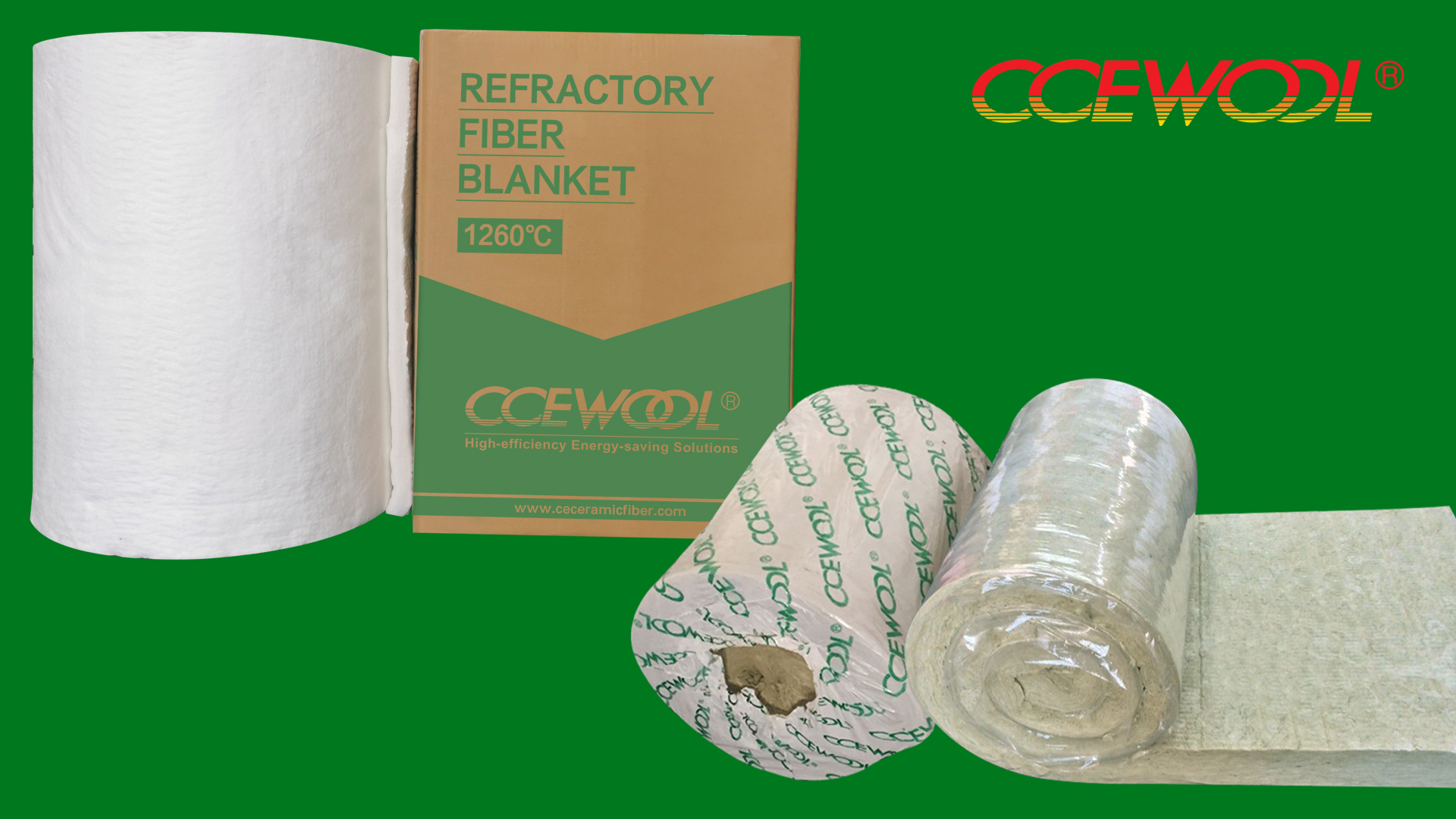
When selecting insulation materials for industrial applications, ceramic wool and rock wool are two commonly used high-performance insulation materials. Although they share similarities in application fields and thermal insulation performance, there are significant differences in their materials, properties, and suitable usage scenarios. To help customers better understand these two materials, this article will compare ceramic wool and rock wool, with a focus on the advantages of CCEWOOL® ceramic fiber.
What is Ceramic Wool?
Ceramic wool (also known as ceramic fiber) is a lightweight insulation material made from high-purity alumina and silicate melted at high temperatures. CCEWOOL® ceramic fiber offers excellent high-temperature resistance and is widely used in industrial insulation for furnaces, pipelines, and high-temperature vessels.
What is Rock Wool?
Rock wool is an insulation material made from basalt and other natural minerals melted at high temperatures and drawn into fibers. It is primarily used in the construction industry for insulation in walls, roofs, and floors. Rock wool is also used in some medium-temperature industrial insulation applications.
Key Differences Between Ceramic Wool and Rock Wool
Temperature Resistance
Ceramic wool far outperforms rock wool in temperature resistance. CCEWOOL® ceramic fiber can maintain stability in extreme environments up to 1600°C, while rock wool is generally limited to temperatures below 600°C. For equipment that operates continuously in high-temperature environments, ceramic wool is the better choice for ensuring safe operation.
Thermal Insulation Performance
Ceramic wool has a lower thermal conductivity and provides better insulation than rock wool. The fine structure of CCEWOOL® ceramic fiber effectively reduces heat transfer, offering superior insulation in high-temperature environments, whereas rock wool is more suited for medium- to low-temperature insulation needs.
Weight and Strength
Ceramic wool is lightweight and has high tensile strength, making it ideal for high-temperature industrial applications requiring light, efficient insulation. Rock wool, being heavier, may not be suitable for applications with strict weight requirements.
Durability
Due to its chemical stability and resistance to corrosion at high temperatures, CCEWOOL® ceramic fiber has a much longer lifespan than rock wool. In prolonged exposure to high temperatures, ceramic wool maintains its physical shape and insulation properties, while rock wool may deform or degrade as the temperature increases.
Application Fields
Ceramic wool is primarily used in high-temperature industrial insulation scenarios, especially in industries such as metallurgy, ceramics, glass, and petrochemicals. Rock wool is more commonly used for insulation and soundproofing in construction and in some medium-temperature industrial equipment. Therefore, choosing the right material depends on the specific application and operating temperature.
Both ceramic wool and rock wool have their own applicable fields, but for high-temperature insulation scenarios, CCEWOOL® ceramic wool is undoubtedly the superior choice due to its excellent temperature resistance, low thermal conductivity, and long lifespan. Whether in industrial furnaces, metallurgical equipment, or petrochemical vessels, CCEWOOL® ceramic wool provides reliable insulation solutions, helping businesses improve energy efficiency and reduce costs.


