
Ceramic Fibre Block | Soaking Pit Furnace Lining Configuration | More Rational High-Temperature Insulation Design Through Structural Zoning | CCEWOOL®
- 15 Apr, 2026
- Industry
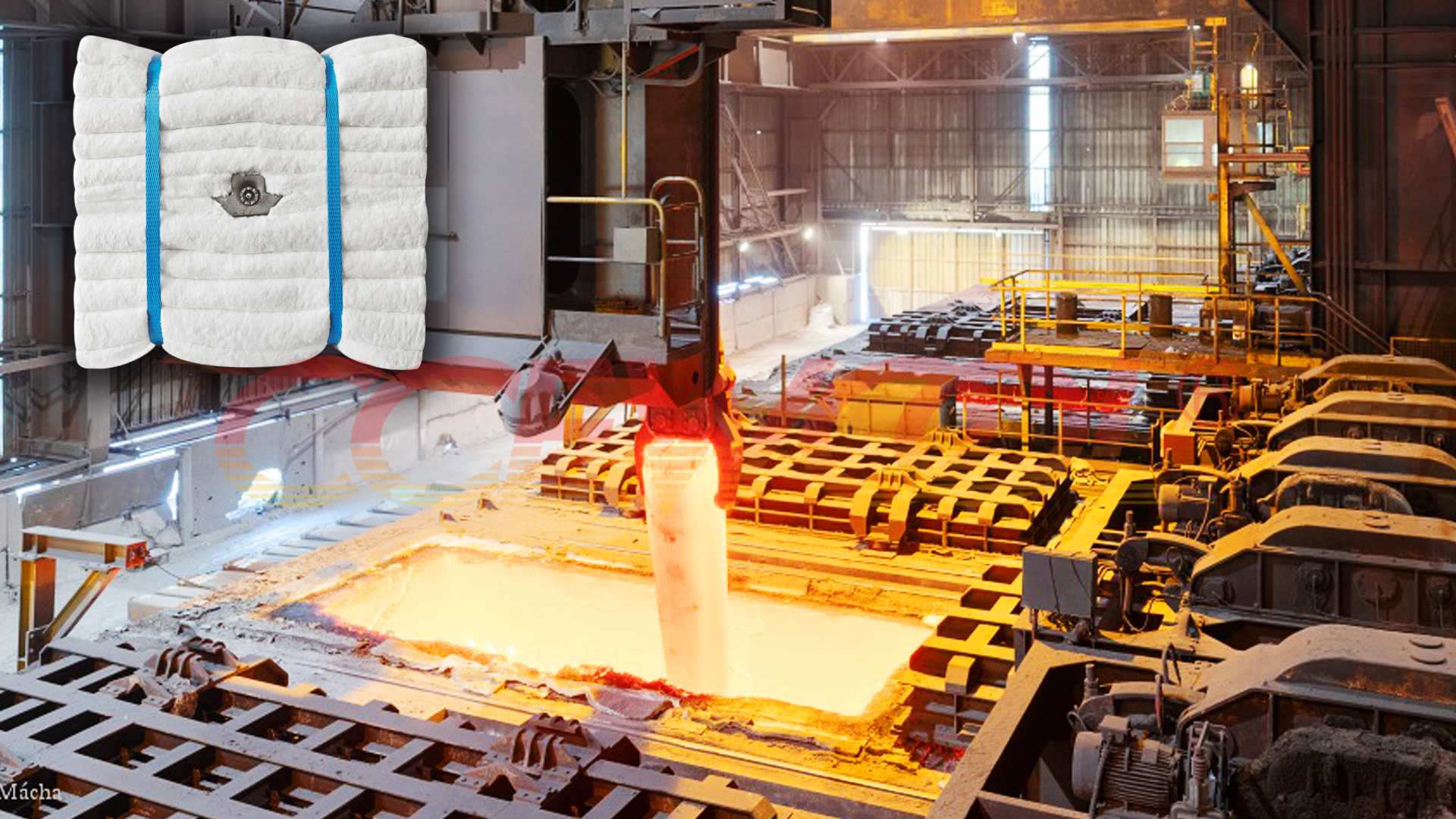
A soaking pit furnace is a typical pit-type metallurgical furnace used in blooming mills for heating and soaking steel ingots. Its primary function is to raise the temperature of steel ingots and equalize their internal temperature before blooming and rolling. Furnace chamber temperatures typically reach 1350–1400°C, and the furnace operates under repeated cycles of heating, soaking, and ingot discharge. Because different areas inside the furnace are subjected to significantly different thermal loads, mechanical impact, and corrosive conditions, the furnace lining cannot rely on a single material system. Instead, the lining must be designed according to the operating characteristics of each structural section.
Furnace Wall and Hearth Hot-Face Areas: Dense Refractories Remain the Preferred Working Lining
The hot-face wall and hearth are the most severely loaded areas in a soaking pit furnace. These sections are continuously exposed to high-temperature radiation, ingot impact, rapid temperature fluctuations, and slag attack. Therefore, the lining materials used in these areas must provide not only high refractoriness, but also strong mechanical strength, good slag resistance, and reliable thermal stability.
In these zones, the working lining should primarily consist of high-strength dense refractory materials to ensure structural safety and long service life under prolonged operation. For soaking pit furnaces, refractory fiber products such as ceramic fibre block are generally not suitable for direct use as the working lining in furnace wall hot-face areas or hearth load-bearing zones. Instead, they are better applied in protected backup insulation layers behind the working lining, where they help reduce heat loss and improve overall energy efficiency.
Regenerator Chamber: The Core Zone Most Suitable for Fiber Insulation Structures
Unlike the furnace wall hot-face and hearth, the regenerator chamber mainly serves to recover waste heat from the furnace. Its maximum operating temperature is generally around 950–1100°C. Although this area is subjected to lower mechanical loads, it places higher demands on insulation performance, heat storage control, and long-term sealing integrity. As a result, it is usually the most suitable section in a soaking pit furnace for the application of refractory fiber linings.
For the side walls, end walls, and roof of the regenerator chamber, a composite structure consisting of CCEWOOL® 1400LZ ceramic fiber blanket as the layered backup lining + CCEWOOL® 1430HZ S-fold thermal ceramics modules as the hot-face insulation layer is a more rational solution. The blanket layer mainly provides auxiliary insulation, leveling, and compensation, while the thermal ceramics modules form the main insulation layer, helping reduce heat loss, decrease lining weight, and improve both installation efficiency and long-term operating stability.
Compared with conventional heavy insulation structures, this composite fiber lining is more effective in reducing furnace heat storage and improving thermal response. It also contributes to better sealing performance and overall energy efficiency in the regenerator chamber.
Permanent Cold-Face Insulation Layer: A Critical Section for Reducing Shell Temperature and Heat Loss
In the overall lining system of a soaking pit furnace, the permanent cold-face insulation layer is an important application area for CCEWOOL® ceramic fibre block. This layer is not directly exposed to ingot impact, slag attack, or flame impingement, yet it plays a significant role in controlling shell temperature, reducing outward heat transfer, and improving overall system energy performance.
In this structural layer, CCEWOOL® 1260HPS ceramic fiber blanket, boards, and CCEWOOL® 1260°C ceramic fibre block can be selected according to design requirements. For projects aiming to strengthen energy-saving performance, the use of lightweight, low-thermal-conductivity fiber insulation is generally more effective than traditional heavy insulation materials in reducing heat loss and lowering the overall structural load of the furnace.
Particularly in soaking pit furnace energy-saving retrofit projects, optimization of the permanent cold-face insulation layer is often one of the easiest measures to implement and one of the most direct ways to improve thermal performance.
Furnace Cover, Furnace Opening, and Edge Sealing Areas: Better Suited to Fiber Compensation and Sealing Structures
Although the furnace cover, furnace opening, and edge connection areas do not necessarily bear the same heavy load as the hearth, they are often the areas where heat leakage is most significant during operation. These zones repeatedly undergo opening and closing movements, local thermal shock, and structural micro-displacement. Therefore, in addition to insulation performance, sealing capability and expansion compensation must also be considered.
In these areas, CCEWOOL® 1260°C ceramic fiber rope and tape are better suited for sealing, compensation, and localized lightweight insulation. Compared with rigid materials, ceramic fiber textiles are more capable of accommodating localized displacement while maintaining continuous surface contact, thereby reducing heat leakage and improving the overall thermal integrity of the furnace system. For areas requiring frequent maintenance or localized replacement, fiber structures also offer greater flexibility in installation and service.
Localized High-Stress Areas: Transition Linings with Greater Structural Integrity
In soaking pit furnaces, the areas around burners, flue turning zones, openings, and localized structural connections are typically subjected to more concentrated thermal loads and stresses. These sections not only operate at high temperature, but may also be affected by gas flow erosion, structural restraint, and localized thermal stress concentration.
For such locations, CCEWOOL® ceramic fiber vacuum-formed shapes or fiber castable structures with stronger overall integrity are generally more suitable, enabling a smoother transition with the surrounding fiber lining. This approach helps reduce localized thermal bridges, lower the risk of cracking, and improve the stability of lining nodes. Although these areas may not be large, they have a significant influence on the overall lining life and operational reliability of the soaking pit furnace, and must therefore be considered separately in the design.
The Key to Soaking Pit Furnace Lining Optimization: Not Full Fiberization, but Rational Structural Zoning
A soaking pit furnace differs from conventional continuous heating furnaces in that it operates under a combination of high temperature, impact, thermal shock, and intermittent temperature fluctuation. Therefore, the key to lining optimization is not full fiberization of the entire furnace, but rather rational material allocation according to the service characteristics of each section.
A more appropriate configuration strategy generally includes:
Furnace wall hot-face areas and hearth load-bearing zones: high-strength dense refractories to ensure structural safety and durability
Regenerator chamber side walls, end walls, and roof: a composite structure of CCEWOOL® 1400LZ ceramic fiber blanket as the layered backup lining + CCEWOOL® 1430HZ S-fold thermal ceramics modules
Permanent cold-face insulation layer: CCEWOOL® 1260HPS ceramic fiber blanket, boards, and CCEWOOL® 1260°C ceramic fibre block to reduce shell temperature and heat loss
Furnace cover, furnace opening, and edge sealing areas: CCEWOOL® 1260°C ceramic fiber rope and tape for sealing and compensation, reducing heat leakage and improving stability in cyclic opening/closing sections
Localized high-stress nodes: transition lining structures with stronger integrity, such as CCEWOOL® ceramic fiber vacuum-formed shapes, to improve local reliability
Only through this type of zoned design can the performance advantages of different materials be more effectively utilized, enabling a better balance among energy efficiency, structural stability, installation efficiency, and maintenance convenience in soaking pit furnace applications.
For soaking pit furnaces, which are high-temperature metallurgical furnaces with intermittent temperature fluctuation and substantial mechanical load, the core of lining design is not simply pursuing a higher temperature rating, nor is it the simplistic promotion of full furnace fiberization. Instead, it lies in establishing a more scientific product configuration logic based on the actual service conditions of different structural areas.
In high-load hot-face zones, high-strength dense refractories should remain the primary choice. In contrast, in regenerator chambers, permanent cold-face insulation layers, and localized sealing and compensation areas, the lightweight, high-efficiency insulation advantages of CCEWOOL® ceramic fibre block should be fully utilized. Only a systematic design approach based on structural zoning can deliver a more rational lining configuration, more stable long-term performance, and better overall energy-saving results.


