
Calcium Silicate Board Insulation | Aluminum Melting Furnace Wall Backup Insulation Project | Aluminum Processing Industry | South Korea | CCEWOOL®
- 21 Sep, 2026
- Insight

Project Overview
Cooperation Years: 2 Years
Destination: South Korea
Order Volume: 1 × 40HC Container
Product Details
Product: 1000°C Calcium Silicate Board Insulation | CCEWOOL®
Size: 25 × 150 × 600 mm, 40 × 150 × 600 mm
Density: 250 kg/m³
Packaging: Carton Box + Pallet
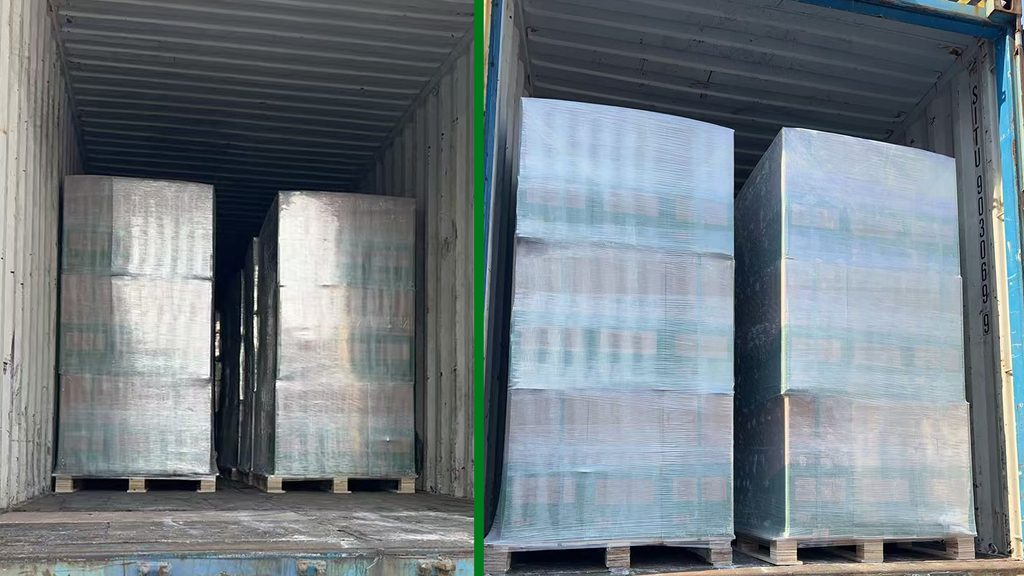
Recently, CCEWOOL® completed another order of 1000°C calcium silicate board insulation for shipment to South Korea. The order includes two sizes, 25 × 150 × 600 mm and 40 × 150 × 600 mm, both with a density of 250 kg/m³ and packed in cartons with pallets. The products are mainly used for wall backup insulation and downstream Fabrication in the customer’s aluminum melting furnace project.
The lining system of an aluminum melting furnace typically consists of a refractory working lining and a backup insulation layer. For furnace wall backup areas, the insulation material must not only help reduce heat transfer toward the furnace shell, but also provide suitable thicknesses and dimensions according to the furnace structure, refractory lining configuration, and available installation space.
In localized narrow areas, corners, interfaces, and other structurally complex sections, standard large-format boards often require extensive on-site cutting. For this project, the customer therefore placed particular emphasis on Fabrication size customization and the ability of the boards to support downstream shaped-component processing.
To meet these requirements, CCEWOOL® provides support through customized dimensions, consistent Fabrication quality, and the capability to produce custom-shaped components. This allows the products to better match different structural and installation requirements while maintaining reliable dimensional consistency and processing stability, providing more flexible and efficient support for subsequent installation and batch project applications.
Fabrication Size Customization for a Better Fit with Furnace Wall Backup Structures
CCEWOOL® can customize the thickness, width, and length of calcium silicate board insulation according to customer drawings, installation dimensions, and downstream processing requirements, allowing the boards to more closely match their intended application dimensions before shipment.
This customized approach can help customers:
Better match furnace wall backup structures
Reduce on-site cutting of large-format boards
Minimize dimensional adjustment work
Reduce material waste
Improve batch installation efficiency
Simplify downstream Fabrication processes
For furnace lining projects that require large quantities of components with repeated dimensions, producing the boards to the required sizes in advance can also help improve dimensional consistency across different components.
Stable Fabrication Quality Supports Shaped-Component Processing
In addition to dimensional customization, the customer also places considerable importance on the downstream processing performance of the calcium silicate board.
Industrial furnace interiors are not composed entirely of flat, regular surfaces. Furnace wall corners, interfaces, openings, and localized connection areas often require insulation components in different shapes. The board therefore needs to provide good machinability for further processing.
CCEWOOL® Calcium Silicate Board offers stable board structure and dimensional control and can be further processed according to customer drawings into insulation components of different sizes and shapes, including:
Cut-to-size narrow boards
Angled components
Boards with openings
Grooved boards
Stepped components
Other custom-shaped parts
For batch Fabrication projects, a stable board structure helps make cutting, milling, grooving, and shaped-component processing more consistent, while reducing edge damage and repeated finishing and improving dimensional consistency of finished parts.
This means customers can purchase not only standard calcium silicate board insulation, but also customized components that are closer to their final installation geometry, helping reduce on-site processing requirements.
Customized Sizes + Shaped Fabrication for Complex Furnace Lining Projects
CCEWOOL® combines Fabrication size customization with shaped-component processing capability, providing Calcium Silicate Board in different thicknesses, widths, lengths, and shapes according to actual project structures. This allows the products to better fit furnace wall backup areas, corners, interfaces, and other localized complex structures.
Customer Feedback
“Since we began working with CCEWOOL®, they have been able to provide calcium silicate boards in different thicknesses and dimensions according to our project requirements. The products have stable dimensions and are also well suited for downstream Fabrication. For special structures, they can process components into different shapes according to our drawings, which helps us reduce a considerable amount of on-site cutting and adjustment. Flexible customization, stable processing quality, and reliable supply are important reasons why we continue to work with CCEWOOL®.”
Through customized specifications + stable Fabrication quality + shaped-component manufacturing capability, CCEWOOL® calcium silicate board insulation can better match aluminum melting furnace walls and complex backup insulation structures, helping customers reduce on-site processing, improve batch installation efficiency, and achieve greater flexibility in industrial furnace insulation projects.


